
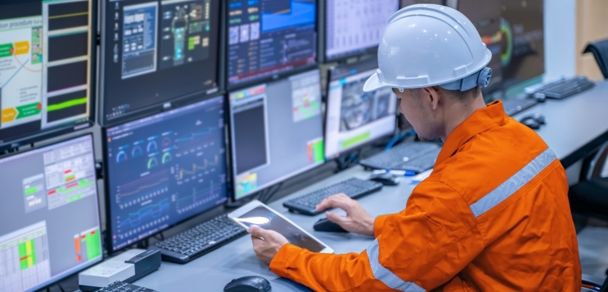
Most mining leaders are not short of information. They are short of time and focus.
Across many sites, supervisors and managers start the day by opening multiple reports: production dashboards, maintenance summaries, shift logs, haulage performance, plant KPIs, and safety or environment metrics. Each is useful in isolation. The problem is the effort required to connect them — and the time it takes to work out where intervention will actually shift the result.
That effort is manageable. It’s just not efficient, especially in complex operations where equipment performance, ground conditions, workforce availability, weather, and logistics interact daily.
The next step forward isn’t “more reporting”. It’s turning reporting into action-oriented insight: a way of working where the system helps people quickly understand what changed, why it matters, and what to do next — without removing human judgement.
Reporting answers “what”. Operations need “so what” and “now what”
Traditional reporting is good at describing outcomes:
- Tonnes moved and milled
- Availability and utilisation
- Recovery and throughput
- Delays and downtime
- Backlogs, work orders, and compliance metrics
But the operational question is usually different:
- What changed since last shift, and what’s driving it?
- Where is the constraint right now — and is it likely to move?
- What trade-off do we accept today: tonnes vs grade, stability vs speed, maintenance vs production?
- What’s the smallest intervention that will prevent a bigger loss later?
When these answers depend on joining five reports and a handful of conversations, you get inconsistent outcomes. Two supervisors can interpret the same situation differently, intervene in different places, and achieve different results — even with the same tools and constraints.
Action-oriented insight reduces the “interpretation gap”.
The hidden cost of “report hopping”
In mining, the cost isn’t just the time spent looking at reports. It’s the decisions that happen later than they should, or not at all, because the signals were too spread out.
A few familiar examples:
Haulage: the bottleneck isn’t where the delay is logged
A haulage report shows queue time rising at the crusher. A separate report shows reduced dig rates on one loading unit. Another shows road condition deterioration after overnight rain. The intervention might be:
- re-assigning trucks
- changing dump locations
- adjusting dispatch rules
- grading a section of road before the next shift
The “answer” is in the data, but only if someone connects it quickly enough.
Maintenance: risk is clear, response is unclear
Condition monitoring flags an emerging issue on a critical conveyor. The maintenance report shows backlog increasing. The production plan is tight. The “best” decision depends on:
- spares availability
- shutdown windows
- downstream buffer
- the real cost of a failure versus a planned intervention
A report can show risk. It doesn’t automatically show the best response path.
Why “action-oriented” requires a platform, not another dashboard
To move from reporting to action, you need two things working together:
- Consistency — the same numbers, definitions, and context across teams, sites, and shifts
- Usability at the point of decision — the ability to quickly interpret changes and choose interventions
This is where a governed intelligence platform matters. It provides the consistent foundation:
- aligned asset hierarchies and naming
- time-aligned events and time series
- standard definitions for KPIs and downtime categories
- traceability (lineage) for critical metrics
- a curated layer that’s reusable, not rebuilt per report
Without this foundation, “insight” becomes debate: Which number is right? What does this code mean? Why doesn’t this match yesterday? That debate burns the exact time and focus operations can’t spare.
Where generative AI fits (and where it shouldn’t)
When a governed intelligence platform is combined with generative AI, the day-to-day effort of interpretation reduces.
The best use of generative AI in mining operations isn’t as an oracle. It’s as an assistant that helps teams use trusted data more effectively — by accelerating understanding and sharpening attention.
Practical examples of what this can look like:
1) Explaining what changed — in plain operational language
Instead of scanning multiple charts:
- “Haulage productivity dropped mainly due to increased queue time at the primary crusher (+18%), driven by reduced crusher availability (two short stoppages) and slower truck speeds on the ramp after rainfall.”
This is not “magic”; it’s summarising governed metrics and events with the right context.
2) Connecting signals across the value chain
AI can help answer:
- “Is the plant throughput drop connected to ROM feed variability, maintenance events, or upstream delays?”
- “Is this a local issue, or showing up across multiple assets/sites?”
That cross-linking is exactly what humans do — but slowly.
3) Highlighting where attention is likely to pay off
Not every deviation needs action. AI can help rank:
- which changes are statistically unusual for the current operating mode
- which ones are historically linked to a bigger loss
- which are likely to resolve without intervention
The objective is focus, not noise reduction for its own sake.
4) Suggesting intervention options and trade-offs
Done properly, AI doesn’t tell people what to do. It presents options:
- likely impact
- risks
- dependencies (spares, weather, workforce, downstream buffers)
That supports judgement rather than replacing it.
Where it shouldn’t go:
- making decisions without traceable inputs
- producing recommendations without showing drivers and confidence
- bypassing operational controls, approvals, or safety processes
The shift you should expect: earlier intervention and more consistent decisions
When insight becomes action-oriented, three changes typically follow:
Earlier intervention
Teams see leading indicators sooner — not after the end-of-shift report is compiled and interpreted. That’s where most value sits: small adjustments before small issues become big losses.
Clearer trade-offs
Mining decisions are rarely binary. They’re trade-offs under constraints. Action-oriented insight makes those trade-offs explicit.
More consistent actions across shifts and sites
The intelligence platform provides the “single way of measuring”. Generative AI helps teams use that consistency by making the interpretation faster and more repeatable.
Consistency is what scales. Not heroics.
Closing thought
Mining doesn’t need more information. It needs better structure, governance and use of the information it already has.
Action-oriented insight is not about replacing experienced judgement. It’s about giving supervisors and managers the clarity to use that judgement faster and more consistently — especially when conditions shift daily and the cost of delay is real.
A governed intelligence platform provides consistency. Generative AI helps teams use that consistency more effectively. Together, they reduce report hopping, sharpen focus, and support decisions that turn into action.