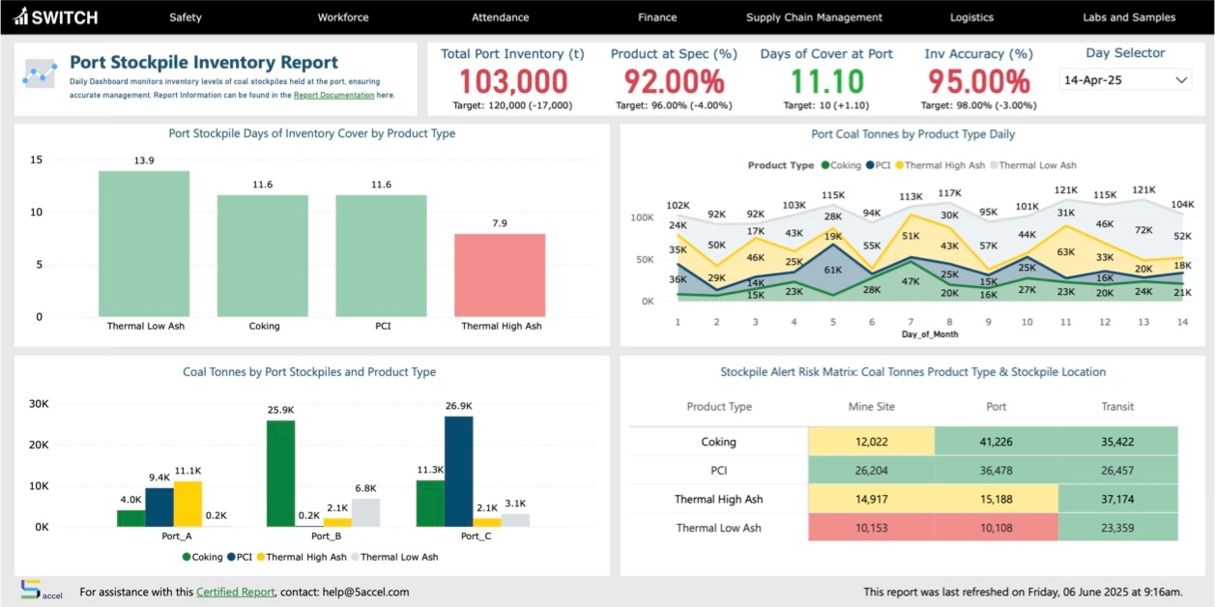
SWITCH Mining enables mining leaders to monitor and improve rail, port, and loadout performance with real-time data and targeted insights.
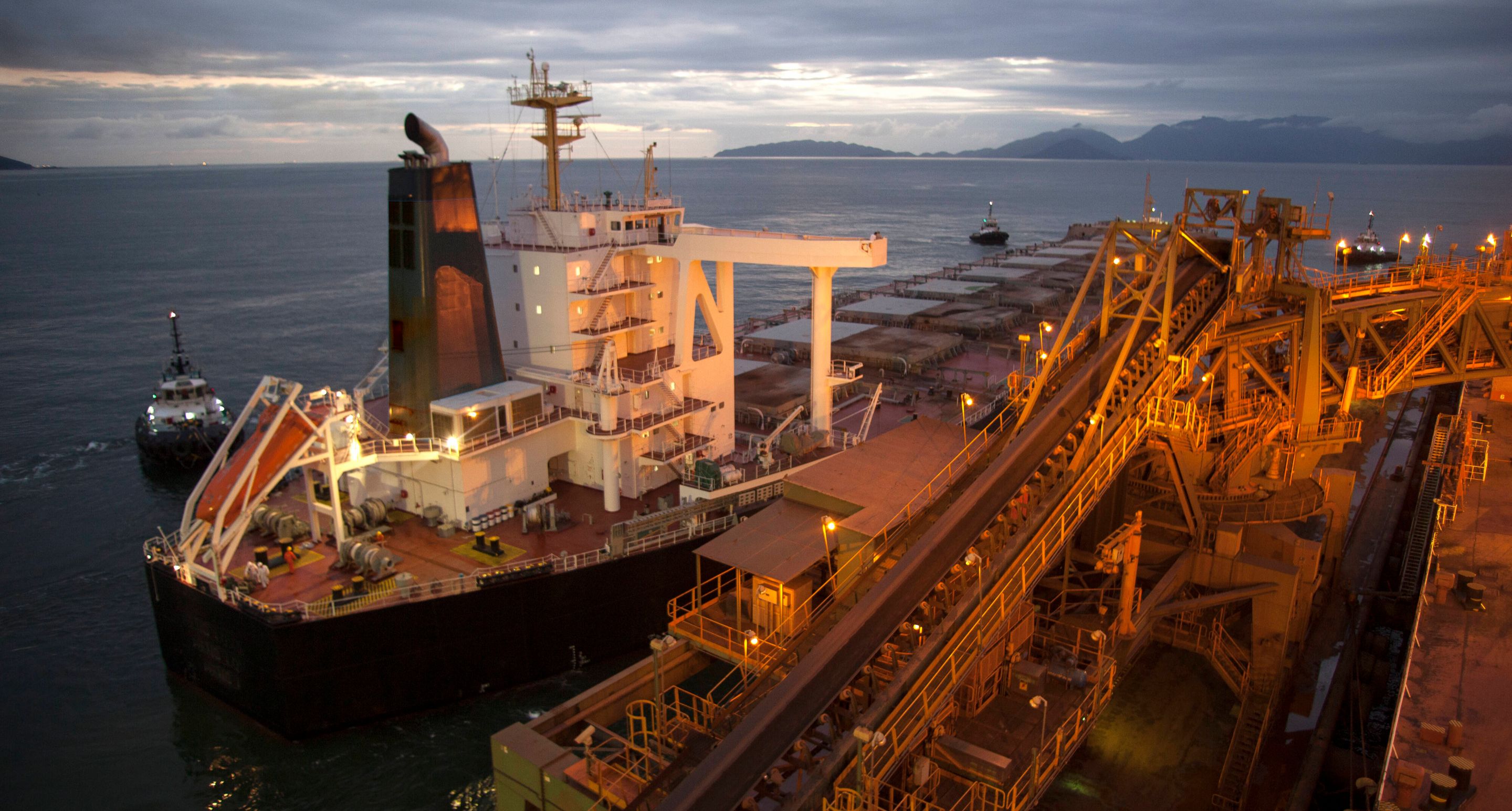
Mining operations face persistent inefficiencies in product movement, stockpile management, and load-out scheduling due to fragmented systems, limited visibility, and manual decision-making. This leads to bottlenecks, demurrage exposure, quality degradation, and reduced export certainty.
SWITCH Mining helps to provide optimal stockpile management, maximised loadout performance, and seamless coordination across rail, road, and port systems—reducing bottlenecks, improving product quality assurance, and enabling miners to meet delivery commitments with confidence.
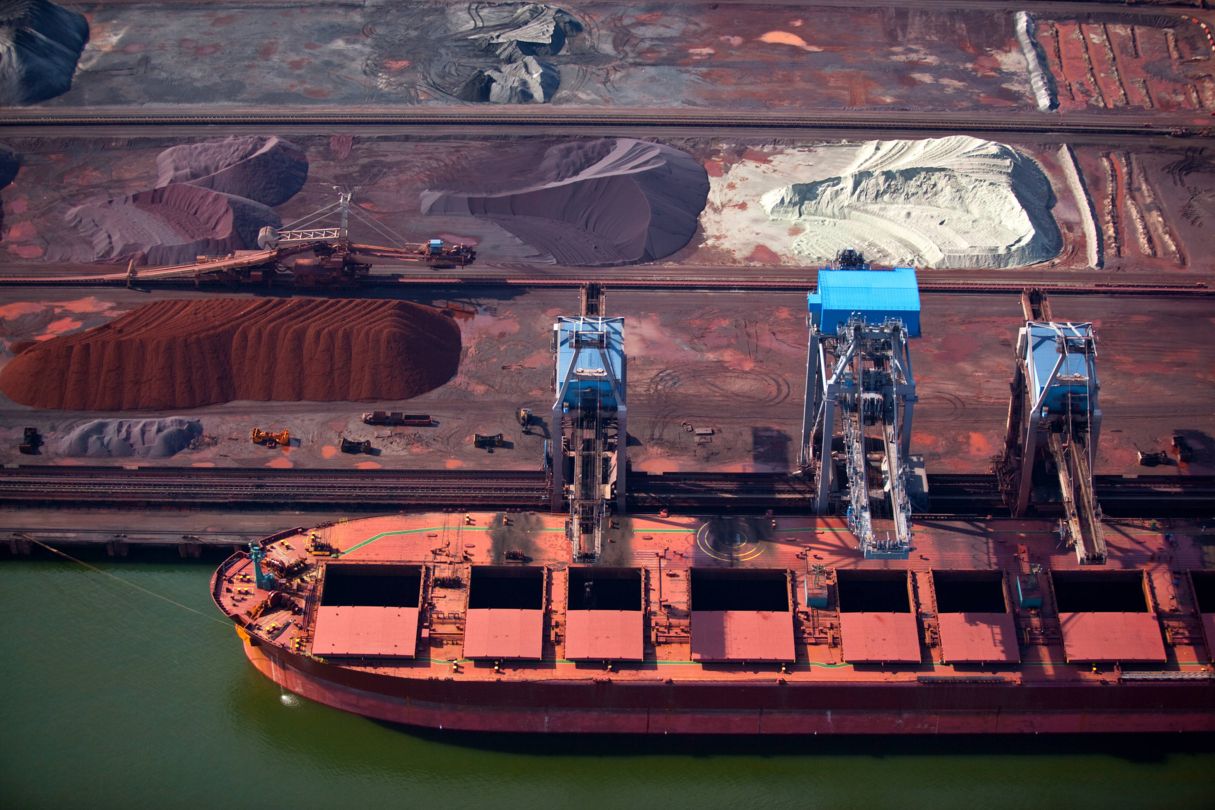
Coordination of transport schedules against production plans and shipping windows.
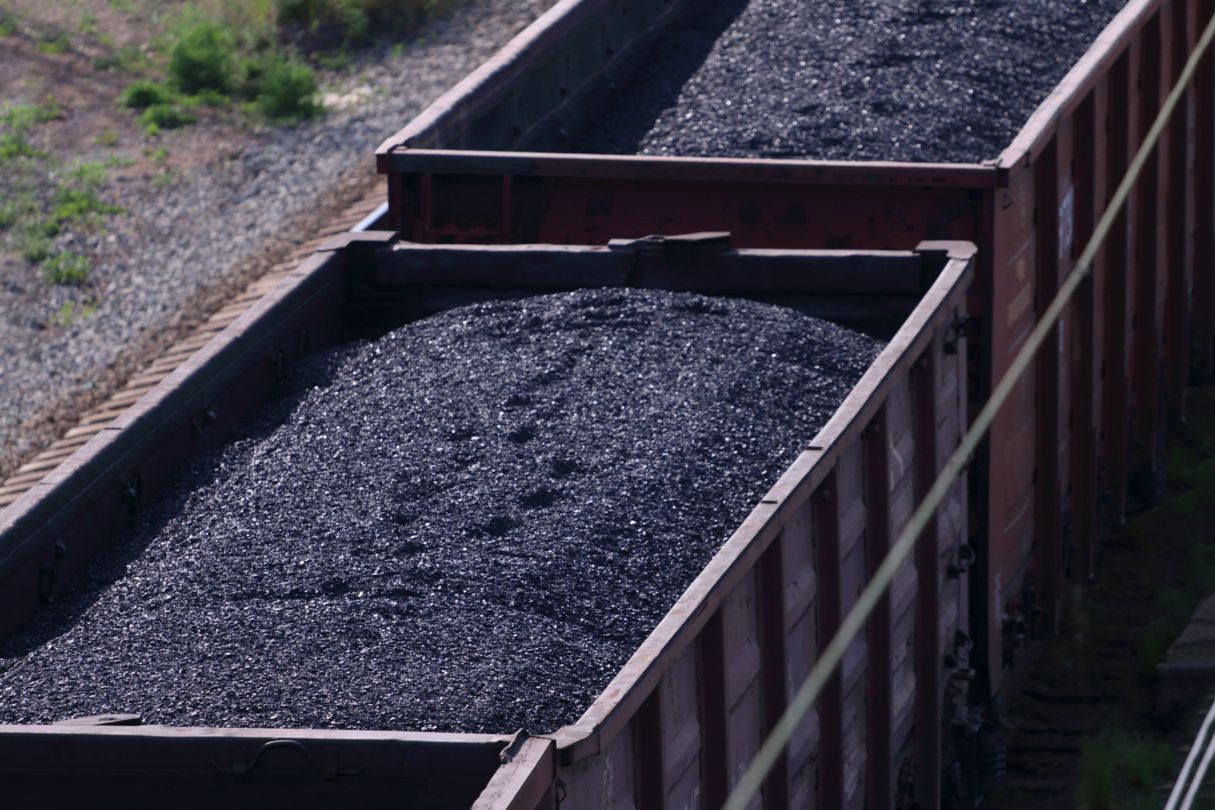
Ensure each train car is loaded to the correct weight, avoiding penalties, underutilisation, and safety breaches.
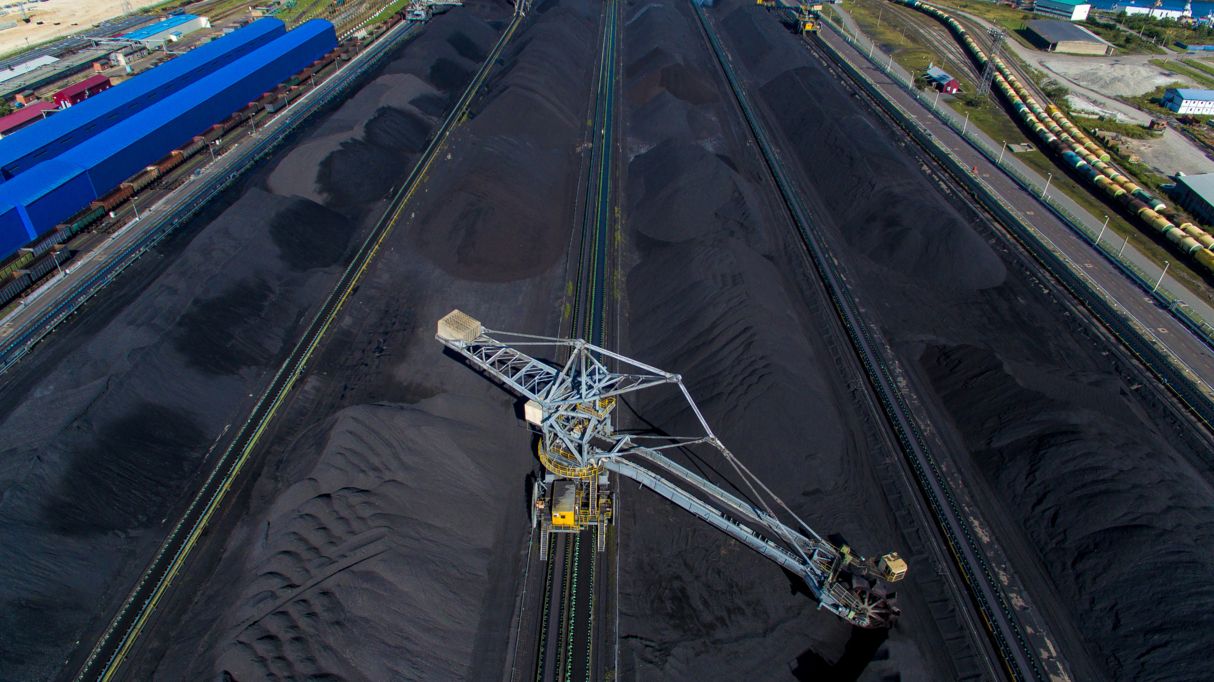
Monitor the reliability of critical TLO infrastructure, identifying frequent faults or downtime patterns.
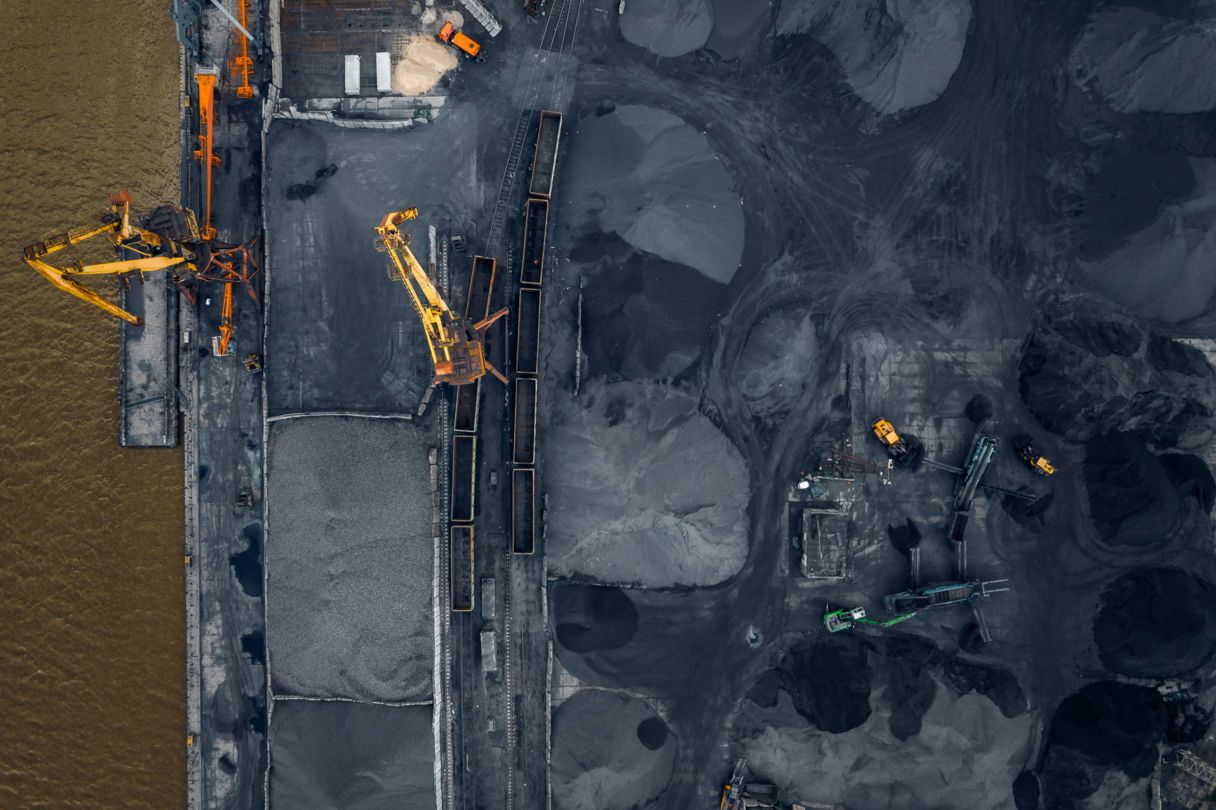
End-to-end visibility of coal stock levels across site, rail, and port.
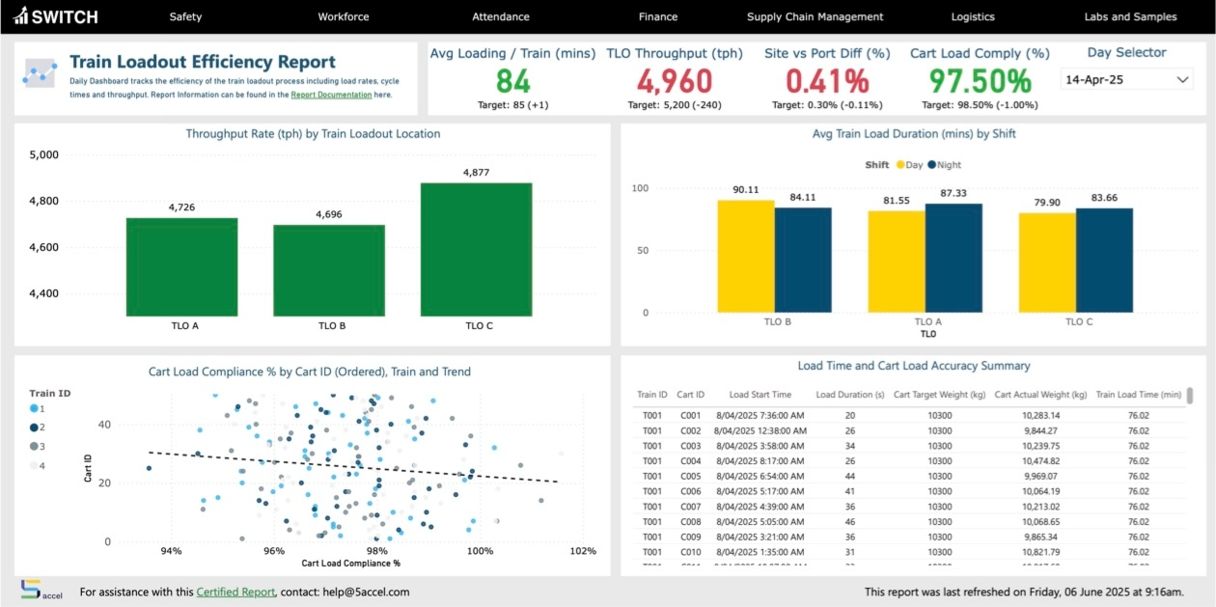
Allows for visibility into load times, throughput rates, and per-cart compliance, enabling identification of systemic or equipment-related issues that reduce daily train movements.
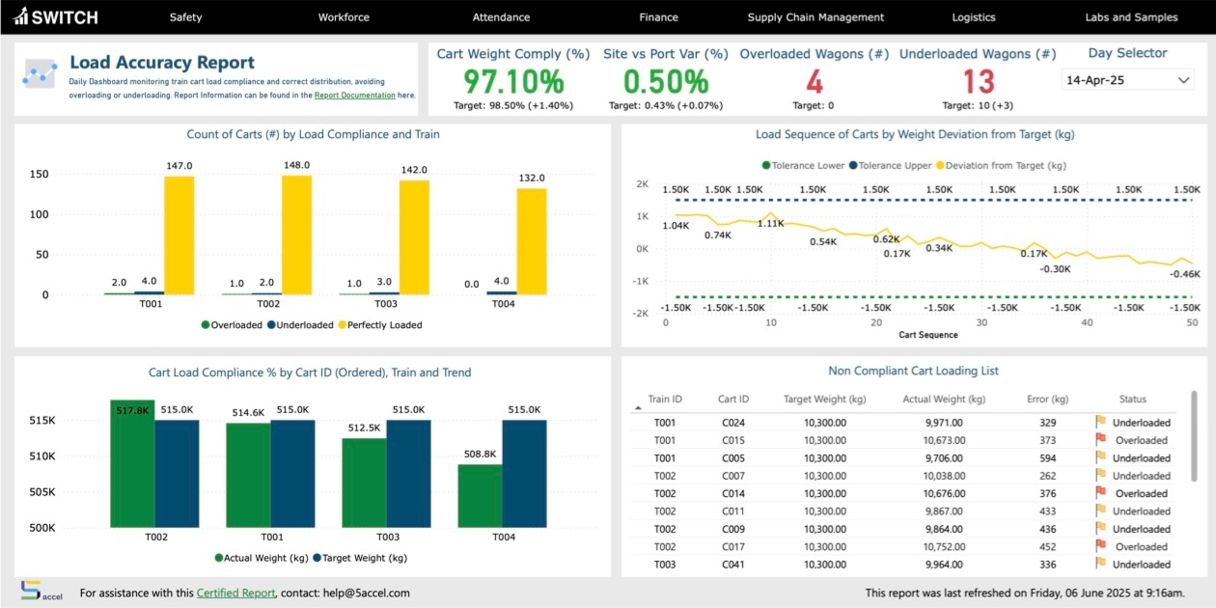
Ensure each train car is loaded to the correct weight, avoiding penalties, underutilisation, and safety breaches. Enable validation of site vs port weight measurements, supporting consistent system calibration and operational integrity.
Gain end-to-end visibility of coal stock levels across site, rail, and port, enabling better scheduling decisions, reduces demurrage risk, and aligns logistics efforts with customer shipment requirements.